

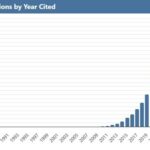

Over the years IMPC resources have contributed to numerous scientific publications including publications by the consortium members themselves as well as other researchers using IMPC generated mouse models and data. Tracking publication metrics can provide insights about the importance of IMPC as a resource as well as the wide range of research fields it contributes to.
Influence metrics tracked via NIH iCite show up until January 2026, IMPC has contributed to 8,423 peer-reviewed publications, showing an increase of 12.8% over a thirteen-month-period. As of January, these publications have accumulated more than 393,000 citations, reflecting a 33.45% increase over the same period. These numbers demonstrate that IMPC resources not only directly contribute to scientific research but also provides material for innovate further research. The accumulative impact of IMPC papers, as measured by weighted Relative Citation Ratio (RCR) across NIH funded papers, 17,911.34 and has increased by 19.9% over the same period. The high RCR demonstrates that the IMPC impact is driven both by the number of IMPC publications and the impact of the individual papers. The continued increase in this metric emphasises the growing influence of IMPC in biomedical research.
IMPC insights and resources have been used for example in biomarker discovery, target validation and precision medicine approaches to advance human health. Considering the wide range of research areas, these examples demonstrate how systematic mouse phenotyping accelerates translation from basic discovery to clinical relevance. As of January, the IMPC has provided functional evidence for at least 109 validated rare disease–gene associations.
All of these metrics demonstrates IMPC’s continued relevance in biomedical research and ability to contribute to new research areas.
References
- Cacheiro, P., Pava, D., Parkinson, H., VanZanten, M., Wilson, R., Gunes, O., The International Mouse Phenotyping Consortium, & Smedley, D. (2024). Computational identification of disease models through cross-species phenotype comparison. Disease models & mechanisms, 17(6), dmm050604. https://doi.org/10.1242/dmm.050604
Special thanks to Dr. Sabine Hölter-Koch for providing these information.